Welcome

This is the blog for Robert Vincent, Chief of Police for the Gulfport (Florida) Police Department. Please feel free to leave comments, but keep in mind that anything appearing on this page may be subject to retention and disclosure in accordance with Florida public records law.

Please keep your posts clean and respectful. Comments are subject to review, and I do not permit lewdness, obscenity, or personal attacks.


Monday, April 1, 2019

Ring App May be Misleading--Be Careful


I was recently made aware of the crime reporting feature on the Ring.com neighborhood app, and I wanted to share some concerns.

It’s great when people have access to information quickly and easily, but that only helps when the information is accurate. What is being shared on this app is simply not.

When I compared the Ring weekly crime report to our own records, I found several examples of incidents that were misreported. The app was also showing reports of crimes of which we had no record. Curiously, the app does not reveal its source for the information it is reporting.

There was also a recent alert about what the app called a burglary in progress. It published this alert in the form of a news release stating that Pinellas County Sheriff’s Office was responding to a burglary in progress in Gulfport. The facts: Gulfport Police Officers responded to a call where a person reported hearing his car alarm going off. When he went outside to check it out, he saw someone walking away. Officers investigated and found no evidence that the car had been burglarized, so they reclassified the call as a suspicious person. 

It is clear that the source for this alert was the Pinellas County Sheriff’s Office “active calls” website. GPD uses PCSO for dispatch, so our calls also appear on this website. If you go directly to the source and follow it, you can see as calls are updated to reflect the most recent and accurate information. Apparently the Ring app does not do this, which means a lot of people are not getting the full story.

If you use this app, which I agree has a lot of great potential, please don’t share or rely on the information without verifying the most up to date data directly from the source.


Thank you.

Thursday, June 1, 2017

Why is Neighborhood Watch Important to YOU?


Today is today.  Today we do not live as we did yesterday, last week, last year, five years ago or twenty years ago.  Our lives and the way we live change by the minute.  No longer can we just sit and wait for something to happen good, or bad. Everyone, you included, has a responsibility to keep the community safe.

Bad things happen everywhere, and Gulfport is no exception. Every day in our town, people are victims of theft, burglary, scams & frauds, and other crimes of opportunity. The truth is, however, most of these things go completely unnoticed by the majority of people. Gulfport is a small and close-knit community, and our police do a great job of making people feel safe. That sense of safety is certainly welcome, but it can be exploited by those with bad intentions.

Not only common thieves, but even organized criminals and terrorist groups specifically target such communities. They feel as though they can work in relative anonymity, shielded by the ambivalence of most residents. In order to fight this threat, the community must work together in its effort.

Neighborhood watch is what brings us together. In simple terms, it’s about looking out for ourselves and others.  Participants learn to always be on guard for any sign of suspicious activity, problems, people and things that just do not seem right. Our members come together to talk about what is happening, what is different, and what is changing. Everyone comes together to learn about and from each other.  The more we know, the more we can be prepared to handle the rapidly changing times we live in.

This concept of “watching and sharing” may be new for many, and change is often unwelcome. This, however, is change that we can control and use to make our lives better, safer and stronger. Neighborhood watch is not a social club, but a gathering of citizens, residents and most importantly, you.  You can make the difference in what happens to you and others. Please join your friends and neighbors, come out and share, learn and get involved.

It’s your community. 

Contact Jim Wright, Volunteer Coordinator
727-893-1022
jwright@mygulfport.us

Thursday, November 17, 2016

Going to the Dogs


I get a lot of questions about dogs. In particular, folks want to know what the city can do when it comes to stray dogs or those that are otherwise on the loose in public. Since the answer can be kind of complicated, I thought it would be best to write it up and publish it as a kind of reference.

First, it is always illegal to allow any dog to be off leash on any public property or on the property of another person without permission. This is a violation of the Gulfport City Code. Any time a Gulfport officer responds to a call about a loose dog, he or she will attempt to identify an owner who can be held accountable. This can be easy if the dog is properly tagged, and if the officer can catch the dog. We have some basic training and equipment for this purpose, but we are not professional animal trappers. However, if we can’t round up the dog in a reasonable time, we’ll have to move on to more important matters. Also, unless there is evidence that the dog is being aggressive towards humans, we won’t use weapons to stop the dog. Catching strays is something we try to do when we can, but it’s simply not our mission.

Pinellas County government has an animal services unit, but they will not pursue non-violent strays either. They will respond and collect any stray dogs that have been caught and restrained, but the bottom line is that there is no “dog-catcher” in Pinellas County or the City of Gulfport.

When we can identify the owner of a loose dog, officers will check for prior violations and can issue citations for violations when appropriate. If the report involves an attack of some kind against a person or another domestic animal, the officer will document the incident appropriately. When evidence accumulates to prove that a dog has repeatedly been violent, the dog may be declared dangerous under Florida law. Once such a declaration has been imposed, the owner may face criminal charges for future violations, and the dog may be seized and euthanized. 

In the past year, Gulfport officers have responded to 477 calls concerning issues with animals.

Tuesday, August 9, 2016

Second Chance for Minor Crimes

You may have heard recently about a program being launched in Pinellas County that will allow certain adult offenders a chance to avoid criminal prosecution. I am happy to announce that the Gulfport Police Department is a strong supporter of this program.

Complete details have not been published yet, but the basic idea is that law enforcement officers will likely soon have the option of referring minor offenses to a diversion program rather than the state attorney's office. The goal will be to recognize that even good people make mistakes once in a while, and we want to help these people to succeed rather than to impede their progress in careers and education.

Eligibility for this program will be limited to just a few misdemeanors will be eligible, and the proposed list includes things like possession of small amounts of marijuana, petit theft, and assault or battery with no or very minor injury. A complete list has been reviewed and endorsed by all law enforcement executives in the county, but it is still pending approval by elected officials in St. Petersburg, which had already been considering a similar program that would have been implemented via city ordinance.

The program is designed to help those who make one or two mistakes; it will not be offered to chronic or repeat offenders. Officers will check criminal history records before making any referrals, and those with relatively recent convictions will not be eligible to participate. Also, there will be a limit to the number of times an individual may take advantage of the diversion program. We want people to make appropriate lifestyle changes, and if they can't do that, then they will continue to be processed in the courts.

Once in the program, those who do not comply with the terms (community service, for example) may end up being criminally charged, and they may not be eligible for future diversions. Successful completion will mean no arrest or criminal record that could show up in a background check.

As Chief of Gulfport Police, I have been at the table for every step of the development of this program, and once it comes into operation, I will ensure that our officers make use of it appropriately. I am thankful for the work the sheriff's office has done and will do to oversee the details of the program, but I am also proud that this is a product of the entire Pinellas County law enforcement community. We work very well together, and this program will be a great example of how our diverse and varied communities can work for the good of all.

Friday, August 7, 2015

Wards and Crime Don't Mix

The Gulfport municipal charter says that the city shall be divided into four wards for the purpose of electing a representative government.  Boundaries for these wards are not defined by the charter; council may alter them at any time, so long as they maintain an equitable population distribution. While population is the only thing where equality is required, it is only natural for residents to draw other comparisons between the wards. One recently popular example is crime.

The police department has never routinely measured or compared crime by ward, but online databases now allow anybody with a computer to do just that. The result is that I am now frequently asked to explain why there is a difference in crime between the wards. Although it’s never said, the implication behind this question is that crime in all four wards should be equal. The reality is that a comparison of wards based on crime is unfair and unrealistic.

Consider the fact that for many decades, the northeast area of Gulfport has typically experienced more crime than other sections of the city. Some like to suggest that this is because of its closer proximity to the much-higher-crime neighborhoods to the east. While that certainly may have some bearing, there are other factors to consider as well. For example, all three public schools are located in this area. That alone brings in an additional 3,000 people a day, effectively doubling the population of Ward 4. This area is also home to our largest retail outlets, employing scores and servicing hundreds more daily.

By contrast, Ward 1 has considerably less crime, but it is almost exclusively residential and has no institutional or large commercial establishments. Also, the majority of the homes are completely within privately-owned developments where visitors are only allowed entry with permission from those who live there.  

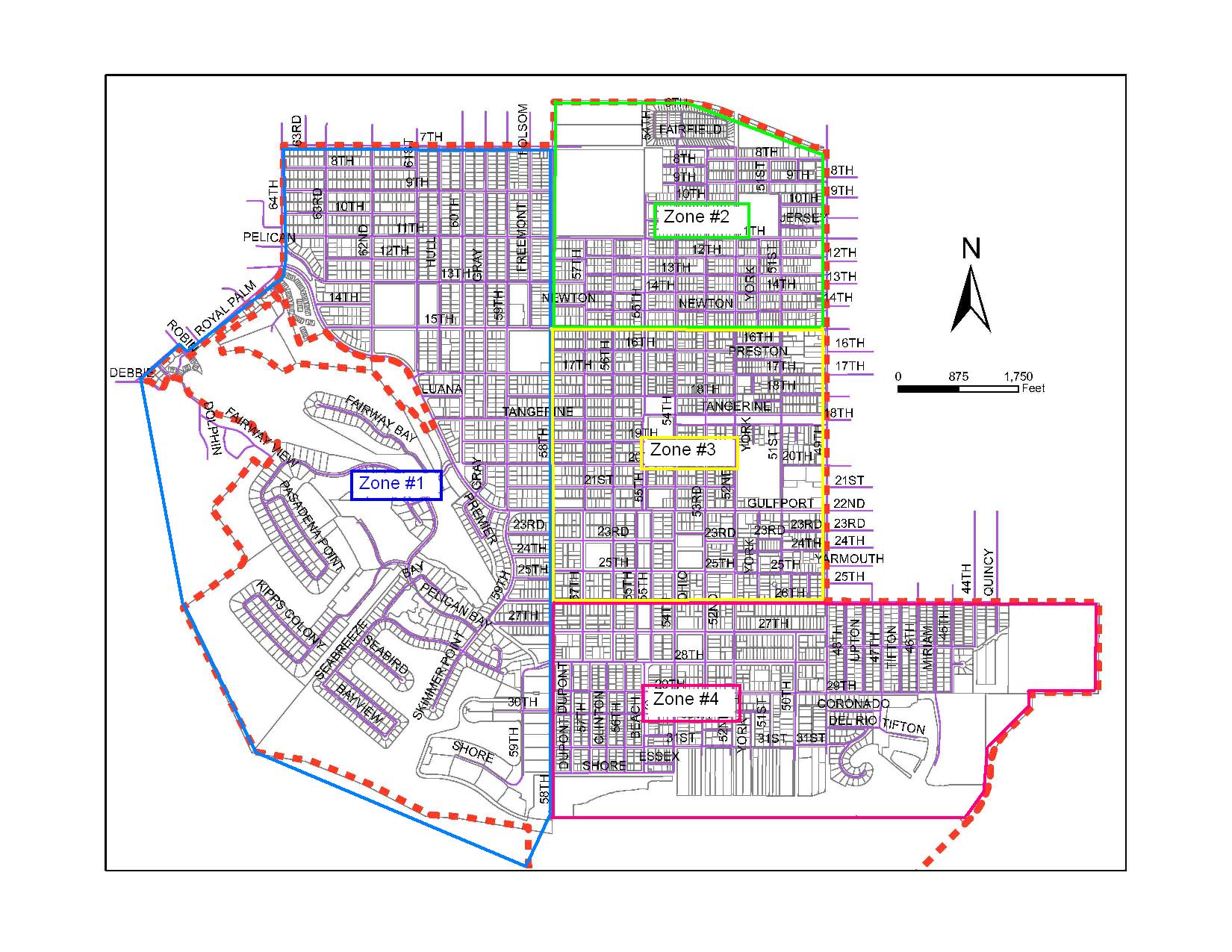
The police department deploys its resources based on the location of the crime, and by design, we do not allow politics or ward boundaries to factor into those decisions. This practice explains why our patrol zones do not align with the wards. Three zones cover the east side, while the west is a zone by itself. This deployment puts police officers in the best position not only to respond to crime as it occurs, but to implement prevention and abatement strategies where they are most needed.


If you are experiencing a problem in your area, please let me know, or use this page to contact a patrol supervisor directly.