You may have heard recently about a program being launched in Pinellas County that will allow certain adult offenders a chance to avoid criminal prosecution. I am happy to announce that the Gulfport Police Department is a strong supporter of this program.
Complete details have not been published yet, but the basic idea is that law enforcement officers will likely soon have the option of referring minor offenses to a diversion program rather than the state attorney's office. The goal will be to recognize that even good people make mistakes once in a while, and we want to help these people to succeed rather than to impede their progress in careers and education.
Eligibility for this program will be limited to just a few misdemeanors will be eligible, and the proposed list includes things like possession of small amounts of marijuana, petit theft, and assault or battery with no or very minor injury. A complete list has been reviewed and endorsed by all law enforcement executives in the county, but it is still pending approval by elected officials in St. Petersburg, which had already been considering a similar program that would have been implemented via city ordinance.
The program is designed to help those who make one or two mistakes; it will not be offered to chronic or repeat offenders. Officers will check criminal history records before making any referrals, and those with relatively recent convictions will not be eligible to participate. Also, there will be a limit to the number of times an individual may take advantage of the diversion program. We want people to make appropriate lifestyle changes, and if they can't do that, then they will continue to be processed in the courts.
Once in the program, those who do not comply with the terms (community service, for example) may end up being criminally charged, and they may not be eligible for future diversions. Successful completion will mean no arrest or criminal record that could show up in a background check.
As Chief of Gulfport Police, I have been at the table for every step of the development of this program, and once it comes into operation, I will ensure that our officers make use of it appropriately. I am thankful for the work the sheriff's office has done and will do to oversee the details of the program, but I am also proud that this is a product of the entire Pinellas County law enforcement community. We work very well together, and this program will be a great example of how our diverse and varied communities can work for the good of all.
Tuesday, August 9, 2016

Friday, August 7, 2015
Wards and Crime Don't Mix
The Gulfport municipal charter says that the city shall be
divided into four wards for the purpose of electing a representative
government. Boundaries for these wards are
not defined by the charter; council may alter them at any time, so long as they
maintain an equitable population distribution. While population is the only
thing where equality is required, it is only natural for residents to draw
other comparisons between the wards. One recently popular example is crime.
The police department has never routinely measured or
compared crime by ward, but online databases now allow anybody with a computer
to do just that. The result is that I am now frequently asked to explain why
there is a difference in crime between the wards. Although it’s never said, the
implication behind this question is that crime in all four wards should be
equal. The reality is that a comparison of wards based on crime is unfair and
unrealistic.
Consider the fact that for many decades, the northeast area
of Gulfport has typically experienced more crime than other sections of the
city. Some like to suggest that this is because of its closer proximity to the
much-higher-crime neighborhoods to the east. While that certainly may have some
bearing, there are other factors to consider as well. For example, all three
public schools are located in this area. That alone brings in an additional
3,000 people a day, effectively doubling the population of Ward 4. This area is
also home to our largest retail outlets, employing scores and servicing
hundreds more daily.
By contrast, Ward 1 has considerably less crime, but it is
almost exclusively residential and has no institutional or large commercial
establishments. Also, the majority of the homes are completely within
privately-owned developments where visitors are only allowed entry with
permission from those who live there.
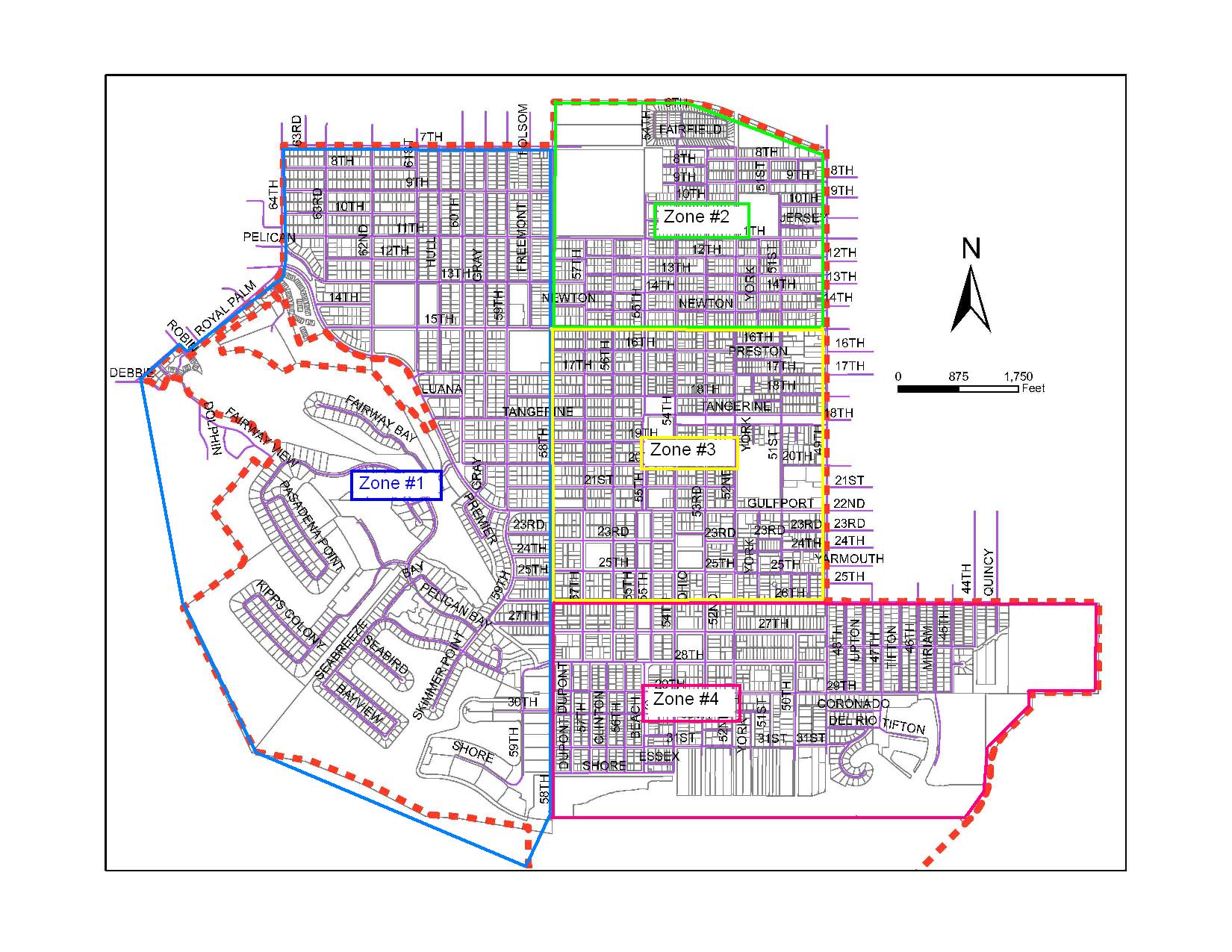
The police department deploys its resources based on the
location of the crime, and by design, we do not allow politics or ward
boundaries to factor into those decisions. This practice explains why our patrol
zones do not align with the wards.
Three zones cover the east side, while the west is a zone by itself. This
deployment puts police officers in the best position not only to respond to
crime as it occurs, but to implement prevention and abatement strategies where
they are most needed.
If you are experiencing a problem in your area, please let
me know, or use this page
to contact a patrol supervisor directly.
Wednesday, July 8, 2015
On Professionalism and Crime Watch
Last night, I made a presentation to the City Council in
recognition of the police department’s achievement of Excelsior status as an
accredited law enforcement agency. In technical terms, this means that we have
been reaccredited five consecutive times without conditions. This is a rare and
coveted honor for those of us in the business, but for Gulfport, it is so much
more.
In our city, where policing is a part of our very thread,
this achievement represents not just the work of the paid employees at 2401 53rd
Street, but of the commitment of an entire community. Certainly I’m not saying
that every resident and business owner has been actively vying to help us to
continue to meet the standards over fifteen years of onsite reviews. I am
saying, however, that everyone has played a vital role.
Accreditation is about professionalism, and that is
represented not just in what we do as police officers but in the relationship
we have with our community. Our conduct both reflects and is reflected in those
we serve. The manner in which we go about our business has a direct impact on
how you go about yours, and vice versa. After almost 22 years of watching this
relationship develop, I can say without doubt or hesitation that I am proud of
my city and my police department. We are diverse and accepting, and we make a
conscious and collective effort to recognize and improve upon our weaknesses.
Ours is a community of acceptance, and this is most powerful for us because we
haven’t always been this way.
Recently, a member of the Facebook page for the “Gulfport
Community Crime Watch” posted a comment suggesting that Gulfport consider
bringing back something from a past we should not be proud of. Once upon a
time, our mostly-white city discouraged our black neighbors in St. Petersburg
from visiting at night. It’s said that there were signs, (official or not) that
made this message clear. While I can take no action to intervene on such comments
(the Constitution’s First Amendment says so), I am certainly entitled to
clarify my personal and professional position in my own forum.
Frankly, the
mere suggestion of including race as a factor in deciding policy is offensive
to me. It is absolutely inappropriate, and as long as I am the police chief, we
will not condone it or allow it. We concentrate our efforts on specific places,
locations, and people identified through professional crime analysis, period.
From my perspective, this is the only acceptable way to do this job.
This is probably a good time for
me to reiterate a point I tried to make in a previous blog post about crime
watch programs (http://gulfportpdchief.blogspot.com/2014/08/on-volunteer-patrols.html).
Any such programs in Gulfport are completely independent of the city and the
police department. We provide no governance, direction, supervision, or
endorsement of any kind, and the opinions expressed by members of these
organizations are theirs and theirs alone. Our role is limited to that of observing
and answering questions or requests for information. We also help to coordinate
participation by neighboring communities. In fact, the last meeting I attended,
a St. Petersburg police officer was there at our invitation.
Since the mission of crime watch
groups is generally in concert with the goals of the city, they are typically
allowed to conduct their meetings in city buildings free of charge. Because of this,
despite our independent status, the city has a responsibility to enforce
regulations against discriminatory practices. To do this without interfering
with any Constitutional rights, the city will require written facility-use
agreements, and these documents will clarify that the organizations must comply
with the city’s human rights ordinance. Any evidence of discrimination by an
organization or its members may result in the termination of the use agreement.
It is our hope that this practice will ensure a fair and respectful dialogue as
these organizations continue to work in partnership with the city.
While I cannot speak to the status
of the “Gulfport Community Crime Watch,” it is important to note that this is
not the only such group in town. Crime watch is, at its very heart, a simple
and informal arrangement between neighbors. If anyone is interested in forming
a crime watch organization anywhere in Gulfport, please feel welcome to contact
us for information on how to get started.
Thursday, January 22, 2015
Introducing the Chief's Chat
I talk a lot about how we practice community policing here
in Gulfport. When I was appointed as chief, I made it clear that my department
would police how our residents wanted us to police. Next month marks my five
year anniversary in this position, and I think (I hope you think, at least)
that I have been doing a pretty good job. I get out in the community and talk
with people every day I am at work; I participate in quite a few community
events; I volunteer for local service groups; and I generally feel that I have
a good handle on the issues that are important to the people in this town.
That said, I think there is room for improvement. I want to
open the door for even better communication. For quite some time now, I have
been hosting a lunch with each of my first line supervisors. The idea is to
give them each a regular forum where they can share ideas and concerns with me
directly. This concept has proven to be very valuable in ensuring buy-in and
commitment to our policing philosophy.
Starting next week, I’m going to apply a similar idea to
communicating with the public. I’ll call it the chief’s chat, and my plan is to
host a quarterly (or more frequent depending on the need) open table where
folks can come in, sit down, and simply talk about whatever’s on their mind. If
you want to chat about the crime trends in your neighborhood, or if you want to
talk about the weather, I’ll be all ears.
The first chief’s chat will be on Sunday, February 1st
at 9:00 at the McDonald’s located at 51st Street and Gulfport Blvd.
I’ll show up a bit early, grab a cup of coffee, and reserve a few tables in the
back. Anybody is welcome to come and share, and I will be there as long as it
takes to hear what you have to say.
See you at the chief’s chat.
Wednesday, December 3, 2014
Body-Worn Cameras
Following the police shooting of Michael Brown in Missourri,
media and public attention focused on conflicting witness statements about what
happened during that tragic encounter. The lack of clarity has spurred many to
press for an increase in the use of body-worn video cameras by police, and our
profession is responding quickly and appropriately.
The International Association of Chiefs of Police has
published a model policy while the Police Executive Research Forum produced an
analysis of the state of the technology. Both of these documents provide
guidance as law enforcement chief administrators face decisions on if and how
to deploy camera systems.
Here in Gulfport, we are ahead of the game, so to speak.
Police officers have been using body-worn cameras for about five years. I initiated
the program as a cheaper alternative to the expensive systems we had been
installing in patrol cars. The body cameras cost about one fifth of what the
in-car systems sell for. Primarily, they have been used by officers who are assigned
vehicles that do not have in-car camera systems. We also issue them to school
resource officers for the purpose of recording any physical interactions with
students. So far, we have had some pretty good results, and I am not aware of
any negative impacts on the officers or the people being recorded.
Our policy on the deployment and use of these camera systems
was last updated in 2013. To be prudent, I have decided to put it up for review
again, this time in consideration of the PERF and IACP publications, as well as
input from the community we serve. To the latter, I recently attended a retreat
with representatives from local law enforcement, the American Civil Liberties
Union, and the National Christian League of Councils. The purpose of the
meeting was to open an ongoing dialogue on how our communities might be best
served by police use of field-recording technology.
While I support the goal of this group, I think it is also
important to consider the input of the public we serve. To that end, I invite
any and all to contact me with your ideas on this subject. Currently some of
the most important decisions to make include the following:
- Should we require all on duty officers to wear a body camera, or should we continue leaving it an optional tool for them to use at their own discretion?
- Should we require officers with body cameras to record all official conduct, some specific types of conduct, or should they have discretion over what they record?
- Should we require officers to inform people when they are being recorded?
Each of these, of course, has pros and cons. A “record
everything” policy, for example, could be extremely burdensome in terms of the
workload associated with retrieving and storing the video. The storage costs
would also become very expensive very quickly. Also, I’d hate to ask officers
to focus on operating the camera when they’re dealing with potentially dangerous
situations. We also have to consider the impact that such a policy might have on
our ability to get confessions, or more importantly, victim statements. At this
point, we just don’t know how people will react if they know that everything
they say to a police officer will be recorded.
My plan is to have an updated policy in effect by the New
Year. If you have any suggestions or comments, please let me know. chief@gulfportpolice.com
Wednesday, October 1, 2014
Check Out the Ink
For almost fifteen years, the Gulfport Police Department has
maintained a policy forbidding officers from having exposed tattoos while in
uniform. Starting today, that policy will change.
Under the new rules, tattoos are not allowed on the hands,
neck or face, and any other exposed tattoos must be able to fit under a 3-inch
by 5-inch card. Of course, inappropriate or offensive tattoos will be
prohibited no matter where they are located or how small they are. Any questionable
material will be reviewed by a panel that will include at least one Gulfport
resident who is not a member of the police department.
Why the change? Why now? Quite simply, the community
standards are changing, and we have to keep up. Tattoos are much more common
than they were two decades ago, and their appearance in professional workplaces
has become routine. A Tampa Tribune
report published last year profiled tattoos among local law enforcement
agencies. The report made it clear that the Gulfport policy was just not the
norm for this time and location.
Gulfport officers with tattoos on forearms have been
concealing them for years with all manner of coverups, which actually look more
unprofessional than the tattoo. All the while, their colleagues working in neighboring
agencies are working the same job without the additional restrictions. That
sort of arrangement certainly does nothing to enhance morale.
We have also turned down plenty other otherwise-qualified
candidates simply because they couldn’t meet our tattoo standard. I’m talking
people with military experience and college education, turned away because of
the ink on their arm. The pool of applicants is already small enough; we don’t
need to help make it smaller.
As the personal appearance policy came up for routine
review, I decided to take another look at tattoos, and after a thorough staff
review, the new policy will go into effect this week. So, be on the lookout for
the new ink out there. My guess is that our diverse community known for its
live-and-let-live lifestyle will have no objections to the change. In fact, I’m
betting we get some compliments. After all, tattoos are art.
Friday, August 8, 2014
On Volunteer Patrols
We have a neighbor here in Gulfport by the name of Al Santos
who volunteers his time to patrol the streets looking for anything suspicious. Al
rides a red scooter and wears an orange vest with the words “Citizen on Patrol”
printed front and back. He covers about 15 miles a day driving around town, and
his self-proclaimed mission is to “call police if I see anything worth
reporting.” Al introduced himself to me by way of an e-mail to let me know what
he was doing. My response: “thank you for your service!”
I have no objection to volunteer patrols, whether they be an
individual effort like Al’s, or something more organized like the Guardian
Angels organization. People have the right to move about on public property,
and I see no reason to oppose anyone who is trying to make the community safer.
In fact, I will even offer these folks information and support to help them provide the best service while keeping safe in the process. One common tip: you're not the police; do not intervene, report.
This being the case, many question why GPD doesn’t have its
own citizen patrol unit. With the recent resurgence of a crime watch program led
by longtime resident, Ernie Stone, many have noted the conspicuous detachment
of the Gulfport Police Department from programs of this nature. So, why don’t
we run the crime watch? Why don’t we organize volunteer patrols? Why don’t we
endorse or solicit such programs?
The answer is actually pretty simple. I believe our
commitment to these kinds of activities should be all or none. If we do not
have the resources to recruit, screen, train, equip, and supervise the people
involved in crime watch and citizen patrols, then we have no business trying to
run their programs. Even a little. The moment we affiliate ourselves with just a small portion of what these people do, the city could become completely
responsible for all of their actions. Unless and until we are prepared to accept that
responsibility, we cannot and should not get involved.
Absent the significant financial commitment required to properly run these programs, GPD will continue its
long-standing practice of providing information and support to the independent
volunteers like Al and Ernie while they exercise their right to do their own
thing.
Subscribe to:
Posts (Atom)